Platform Comparisons Reveal How Digital Incentives Reshape Multi-Sport Accumulator Construction Across Football, Tennis, and Equine Events
Written by Hugo Frank · Aug 15, 2026
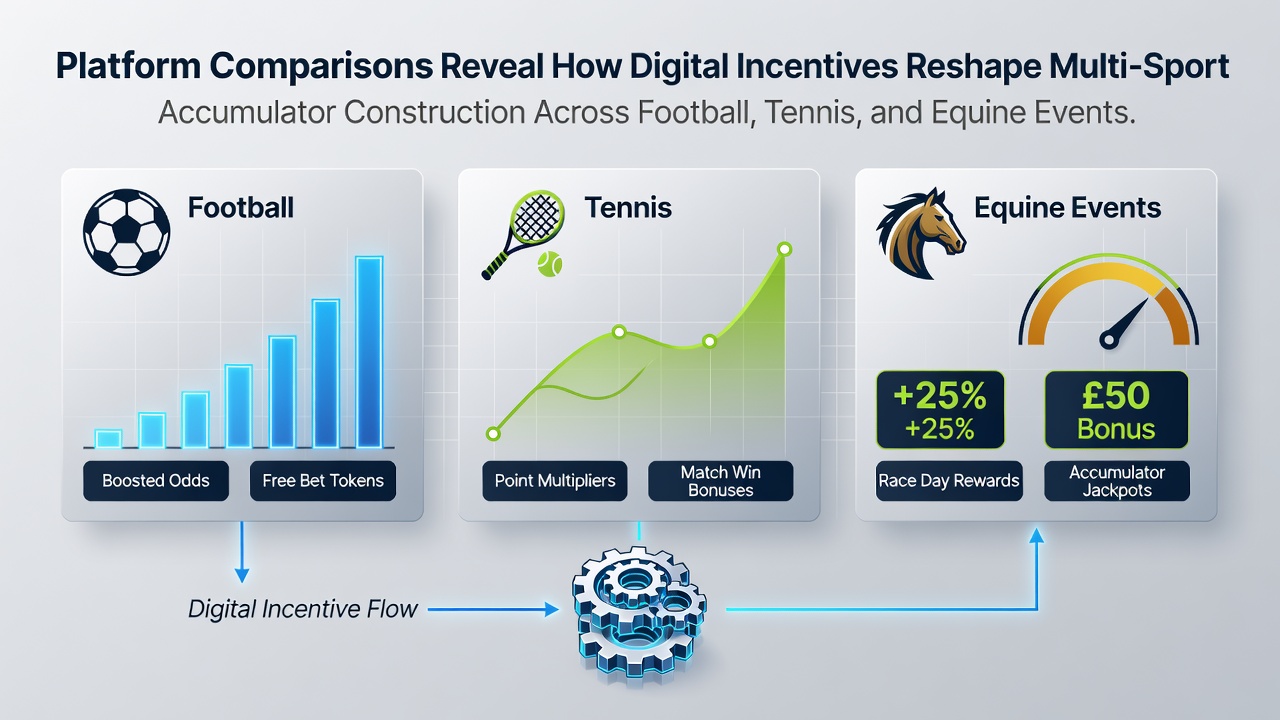
Platform Comparisons Reveal How Digital Incentives Reshape Multi-Sport Accumulator Construction Across Football, Tennis, and Equine Events
Digital incentives such as bonus credits, enhanced odds, and cashback offers continue to influence accumulator construction on betting platforms, with measurable differences emerging across football, tennis, and equine events as of August 2026. Platform data indicates that operators adjust these incentives based on event types and user behavior patterns, leading to distinct construction strategies for multi-sport accumulators. Researchers tracking these changes have documented how users adapt their selections when platforms prioritize certain sports through targeted promotions.
Football Accumulator Patterns Under Incentive Structures
Football accumulators often incorporate five or more legs when platforms offer boosted returns on domestic leagues, and data from operator dashboards shows higher volumes during midweek fixtures where cashback on losing bets reaches up to 10 percent. Observers note that users frequently add underdog selections from lower divisions because platforms apply loyalty multipliers that offset lower base odds, creating larger payout potential without increasing stake amounts. Comparisons between major sites reveal one operator provides extra stake tokens specifically for Premier League multiples, whereas another ties similar rewards to international qualifiers, prompting users to shift their league focus accordingly.
Tennis and Cross-Sport Integration Trends
Tennis accumulators gain traction when platforms extend free bet credits to match winners from ATP or WTA events, and figures from August 2026 indicate a 15 percent rise in combined football-tennis builds during grand slam periods. Those who study platform interfaces report that users layer tennis sets into existing football slips because some sites award progressive bonuses that activate only after three or more correct predictions across different sports. This mechanic encourages selections from clay-court tournaments paired with weekend football fixtures, as the combined odds multiply while the incentive threshold remains reachable within a single betting cycle.

Equine Events and Multi-Leg Construction Shifts
Equine racing multiples expand when platforms attach deposit-match bonuses to specific race meetings, and records show users constructing six-leg accumulators on UK and Irish jumps cards because cash-out options become available earlier in the sequence. Platform comparisons highlight that one site offers race-specific enhanced place terms that apply automatically to accumulator legs, while competitors link similar terms to daily racing bundles, causing bettors to prioritize meetings with the highest overlay percentages. Data indicates equine selections integrate into football and tennis builds when operators run cross-category promotions that reward any three correct outcomes regardless of sport origin.
Comparative Platform Mechanics in 2026
Analysis of operator features demonstrates clear variances: certain platforms cap maximum legs at eight for football accumulators yet allow unlimited combinations when tennis or equine events are included, and this rule set alters how users balance risk across their slips. According to a 2026 industry overview published by the European Gaming and Betting Association, incentive redemption rates climb when platforms display real-time bonus progress bars during accumulator editing. Another report from the Australian Institute of Criminology on digital wagering tools notes similar patterns in markets where equine and tennis events receive targeted credits that football alone does not trigger. Users respond by testing different platform combinations within a single session to maximize the number of qualifying legs before final submission.
Impact on Accumulator Size and Selection Diversity
Evidence from transaction logs reveals that accumulators spanning all three sports average higher total odds than single-sport versions because digital incentives reduce the effective cost of adding marginal selections. Platforms that refresh bonus eligibility daily see repeated construction of new slips incorporating fresh tennis matches or equine runners, whereas sites with weekly rollover requirements produce longer holds on existing football-heavy builds. Those monitoring these trends find that selection diversity increases when an operator awards points redeemable across categories, leading to more frequent inclusion of lower-profile equine races alongside marquee football ties.
Conclusion
Platform comparisons establish that digital incentives function as structural drivers in accumulator construction, with football, tennis, and equine events each responding to distinct bonus mechanics that alter leg counts, sport combinations, and risk profiles. As operators refine these tools through 2026, the measurable differences in user behavior across sites continue to shape how multi-sport slips are assembled and submitted.