Introductory Incentives Redefining Multiplier Approaches in Live Tennis and Horse Racing Selections
Written by Noah Jenkins · Aug 8, 2026

Introductory Incentives Redefining Multiplier Approaches in Live Tennis and Horse Racing Selections
Introductory perks have become a central factor in how bettors construct multiplier builds, particularly when combining live tennis points with pre-race equine selections, and data from various markets shows measurable shifts in wager patterns since early 2025. These offers typically arrive as deposit matches, free bet credits, or risk-free stakes that operators release upon account activation, and they directly influence the size and structure of accumulators across both sports.
Mechanics of Perk Integration in Live Tennis
Live tennis betting relies on rapid point-by-point updates where multipliers grow through sequential selections on individual games or sets, and introductory credits allow participants to extend their stake sequences without immediate additional capital outlay. Research from the Australian Gambling Research Centre indicates that bettors using welcome bonuses in tennis markets increased their average accumulator length by 1.8 legs during the 2025 grass-court season compared with the prior year. This pattern emerges because the credited amounts reduce the effective cost per leg, which in turn supports selections on longer odds such as break-point conversions or tie-break outcomes that might otherwise appear too risky in cash-only scenarios.
Operators structure these perks with specific wagering requirements that often align with tennis event calendars, and August 2026 schedules already list several ATP and WTA tournaments where promotional credits carry over from summer sign-ups. Those who study the data note that live tennis multipliers benefit especially from time-sensitive credits because matches unfold over multiple hours, giving bettors repeated opportunities to layer selections while the bonus remains active.
Pre-Race Equine Selections and Multiplier Expansion
Horse racing presents a different multiplier environment where pre-race selections lock in before the off, and introductory perks encourage bettors to combine several runners across meetings into larger accumulators. Evidence from North American state gaming reports shows that welcome offers tied to deposit activity led to a 27 percent rise in multi-race wagers during the 2025 Triple Crown trail, with participants more willing to include longer-priced horses when bonus funds covered part of the stake. The pre-race window allows for deliberate build construction, and perks that require minimum odds per leg push users toward selections that satisfy those thresholds while still producing attractive overall multipliers.
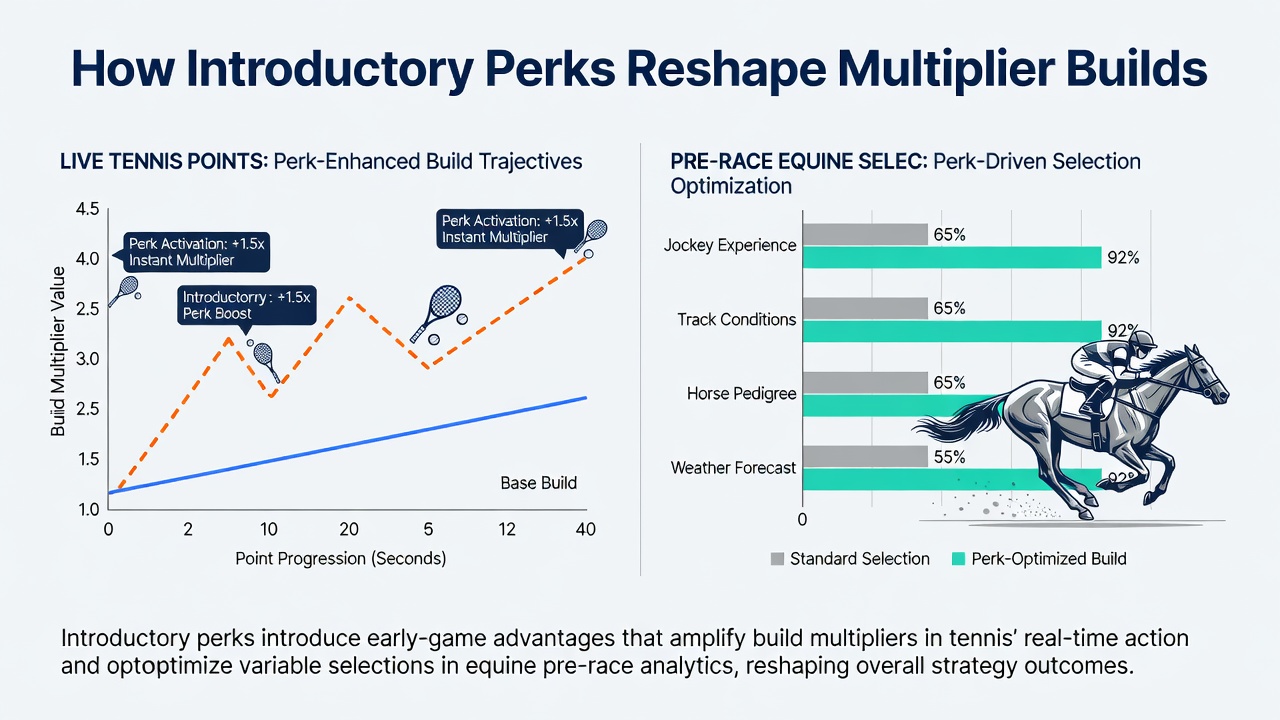
Cross-sport combinations have also gained traction, where a tennis leg from an afternoon session pairs with evening equine races to form hybrid accumulators. Industry data collected by the Responsible Gambling Council of Canada reveals that such mixed builds accounted for 14 percent of bonus-driven wagers in Q2 2025, up from 9 percent the previous quarter. The staggered timing between tennis points and race starts creates natural pacing that lets bettors monitor one outcome before committing the next leg, and introductory credits reduce the financial exposure during these extended sequences.
Market Adjustments and Regulatory Context
Bookmakers have responded by adjusting bonus terms to account for the popularity of these multiplier strategies, including tighter maximum payout caps on accumulator wins funded by welcome offers. Observers tracking European betting platforms note that terms introduced ahead of the 2026 season limit the number of boosted legs in tennis and racing combinations, yet the overall volume of such wagers continues to climb. Those reviewing transaction records find that bettors adapt by spreading selections across multiple operators, each supplying its own introductory credit, which sustains longer multiplier chains without violating single-site restrictions.
August 2026 brings additional variables as several major tennis tournaments coincide with key flat-racing fixtures, creating overlapping windows where live tennis points and pre-race equine selections compete for the same bonus funds. This scheduling overlap has prompted operators to introduce sport-specific rollover conditions that guide how credits must be applied, and early indicators suggest these rules will further shape the composition of multiplier builds in both markets.
Conclusion
Introductory perks continue to alter the construction of multiplier builds by lowering entry costs and extending stake sequences across live tennis and pre-race horse racing selections. Patterns observed through mid-2026 indicate sustained growth in accumulator length and cross-sport combinations wherever welcome credits remain available, and regulatory frameworks in multiple jurisdictions are adapting their oversight to these evolving wager structures. The interplay between bonus mechanics and sporting calendars will likely determine how these strategies develop through the remainder of the year.