Corner Kicks and Chase Finishes: How Midweek Stats Fuel Accumulator Builds Across Football and National Hunt Markets
Written by Noah Jenkins · Jul 25, 2026
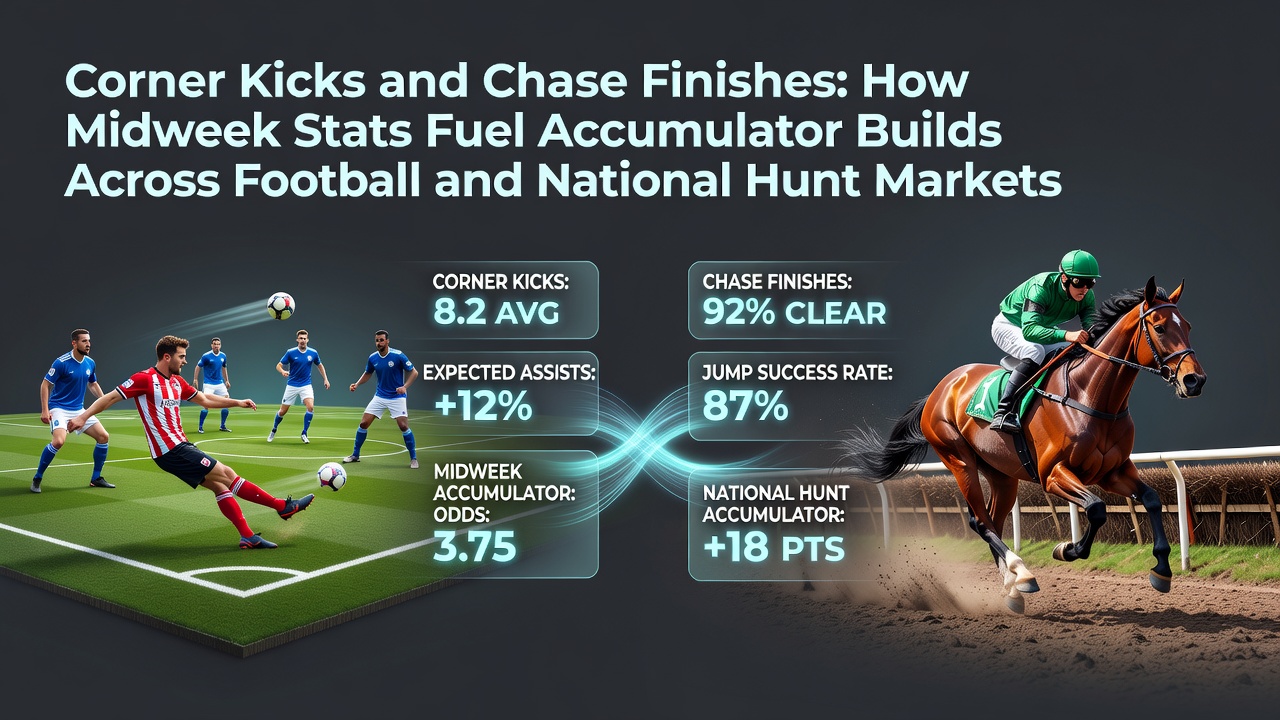
Corner Kicks and Chase Finishes: How Midweek Stats Fuel Accumulator Builds Across Football and National Hunt Markets
Corner kick counts in midweek European league fixtures have long supplied detailed datasets that feed into weekend accumulator structures, while chase finish percentages from National Hunt meetings provide parallel metrics for those building multi-leg bets across football and horse racing markets, and analysts track these figures through platforms that aggregate performance records from domestic cups and midweek cards. Data compiled during July 2026 shows sustained interest in these cross-sport combinations, as bettors incorporate corner averages from leagues such as the Belgian Pro League and the Dutch Eredivisie into selections that also feature chase outcomes from Irish and British summer jumps fixtures.
Tracking Corner Kick Patterns in Midweek Fixtures
Teams that generate elevated corner totals during Tuesday and Wednesday fixtures often carry those tendencies into Saturday and Sunday matches, which allows those constructing accumulators to layer selections based on consistent attacking metrics rather than isolated results. Researchers at the University of Melbourne's sports analytics program have documented how average corner production correlates with expected goal models across multiple European divisions, and these correlations strengthen when filtered through midweek samples that exclude weekend rest periods. Observers note that leagues with compressed schedules produce sharper statistical edges, because squad rotation patterns become more predictable and defensive structures show measurable fatigue.
Chase Finish Percentages in National Hunt Markets
National Hunt chase races scheduled midweek supply finish rate data that mirrors the role corner statistics play in football betting, since trainers and jockeys reveal patterns in jumping accuracy and stamina when fields compete on varied ground conditions. Records from summer meetings indicate that horses completing chases at rates above 65 percent in prior outings tend to maintain those figures when stepped up in class, which provides a foundation for multiples that combine race outcomes with football selections. Those building accumulators frequently cross-reference these percentages with going descriptions and distance adjustments to identify legs that align with higher probability thresholds.
Integrating Midweek Data into Accumulator Construction
Bettors combine corner kick averages from midweek football with chase completion rates from National Hunt cards by identifying overlapping trends in attacking volume and finishing reliability, and this approach expands the pool of potential legs without requiring direct sport-to-sport causation. July 2026 records reveal increased volume in such cross-market builds during periods when both football pre-season friendlies and jumps summer festivals generate fresh statistical inputs. Industry reports from the European Gaming and Betting Association highlight how data transparency across regulated operators supports more granular filtering of these metrics, which in turn influences the structure of accumulator offers available through licensed platforms.

Statistical services now deliver automated alerts when midweek corner totals exceed historical norms or when chase fields produce unusual completion clusters, and these notifications allow builders to adjust selections before weekend fixtures lock in. One documented case involved a midweek Belgian league double that featured elevated corner counts, which later aligned with a jumps meeting where multiple favorites completed chases cleanly, creating a four-leg structure that drew from both datasets. Such examples illustrate how independent performance indicators can be sequenced without forcing artificial connections between the underlying sports.
Regional Variations and Data Sources
Football leagues in Scandinavia and Eastern Europe generate corner profiles that differ from those in Western Europe during midweek rounds, while National Hunt tracks in Australia and New Zealand contribute chase metrics that diversify accumulator options for those operating across hemispheres. Government statistical releases from the Australian Communications and Media Authority track wagering volumes on combined football and jumps products, showing steady uptake when midweek data releases coincide with major racing carnivals. These regional differences encourage accumulator builders to weight selections according to league-specific tendencies rather than applying uniform formulas across all markets.
Conclusion
Midweek corner kick statistics and National Hunt chase finish rates continue to supply measurable inputs for accumulator construction across football and jumps markets, with patterns emerging from scheduled fixtures that repeat across seasons. Data aggregation tools and regulatory reporting frameworks support ongoing refinement of these approaches, while cross-regional sources provide additional context for those comparing trends between European football and international jumps racing. The integration of these datasets reflects established practices in sports wagering analysis rather than isolated innovations.